
May His Memory Be a Blessing: Meaning, Origins, and Comforting Quotes
In moments of profound loss, finding the right words can feel like an impossible task. While many offer a simple “I’m sorry,” the Jewish tradition provides a more powerful sentiment: “May his memory be a blessing.” This phrase does more than acknowledge death; it celebrates a life that continues to influence the world.
Whether you are looking for “May his memory be a blessing” quotes to include in a card or want to understand the deep theological roots of this expression, this guide explores how this ancient tradition offers modern comfort.
May His Memory Be a Blessing: Hebrew Origins
The traditional phrase is Zichrono Livracha (for a man) or Zichronah Livracha (for a woman). In written form, you will often see the abbreviation Z” L following the name of someone who has passed.
The concept is rooted in the idea that righteous individuals don’t need monuments; their words and deeds are their true memorials. When we speak their names and follow their examples, we keep that blessing active.
May His Memory Be a Blessing in the Bible
While the exact wording is post-biblical (found extensively in the Talmud), the sentiment of “may his memory be a blessing” in the Bible can be traced to the Book of Proverbs.
Proverbs 10:7 states: “The memory of the righteous is a blessing, but the name of the wicked will rot.”
“May his memory be a blessing” verse establishes the biblical foundation for the phrase. It suggests that a person’s reputation and the memory they leave behind are the true measures of their life’s worth.
Variations: “Be for a Blessing” vs. “Be a Blessing”
You may notice slight variations in how people use the phrase. When comparing “May his memory be for a blessing” vs. “May his memory be a blessing,” the difference is largely grammatical.
-
For a blessing: This is a more literal translation of the Hebrew “L’vracha” (the “L” prefix meaning “for”). It implies the memory catalyzes future blessings.
-
Be a blessing: This is the more common, fluid English translation used in modern sympathy cards and conversation. Both carry the same weight and intention.
Using the Phrase for Non-Jews
A common question is whether it is appropriate to say, “May his memory be a blessing to non-Jews.” The answer is a resounding yes.
While the phrase is Jewish in origin, its sentiment is universal. It is a deeply respectful way to honor anyone who lived a virtuous life. If you are a non-Jewish person offering this to a Jewish mourner, it is seen as a thoughtful gesture of cultural literacy and empathy.
May His Memory Be a Blessing Quotes and Verses
If you are looking for ways to express this sentiment in a eulogy or sympathy note, consider these variations:
-
The Classic: “May his memory be a blessing to all who knew him.”
-
The Spiritual: “May his soul be bound up in the bond of eternal life, and may his memory be a blessing.”
-
The Reflective: “He may be gone from our sight, but never from our hearts. May his memory be for a blessing.”
What does “may his memory be a blessing” mean?
At its heart, the phrase expresses a wish—a hope on behalf of the deceased and for those who loved them. It says, “This person’s life held meaning, and the memory of who they were should bring comfort, not only sorrow.”
The phrase shifts grief slightly—not away from pain, but toward purpose. The person is gone, but the impression they left, the love they gave, and the values they modeled—these continue. And continuing them becomes an act of blessing.
“The life of the dead is placed in the memory of the living.”— Marcus Tullius Cicero
In Jewish thought, memory carries deep moral weight. To remember someone is not merely sentimental — it is an ethical act. It is how a person lives on.
The Hebrew origin of “may his memory be a blessing” and its abbreviation
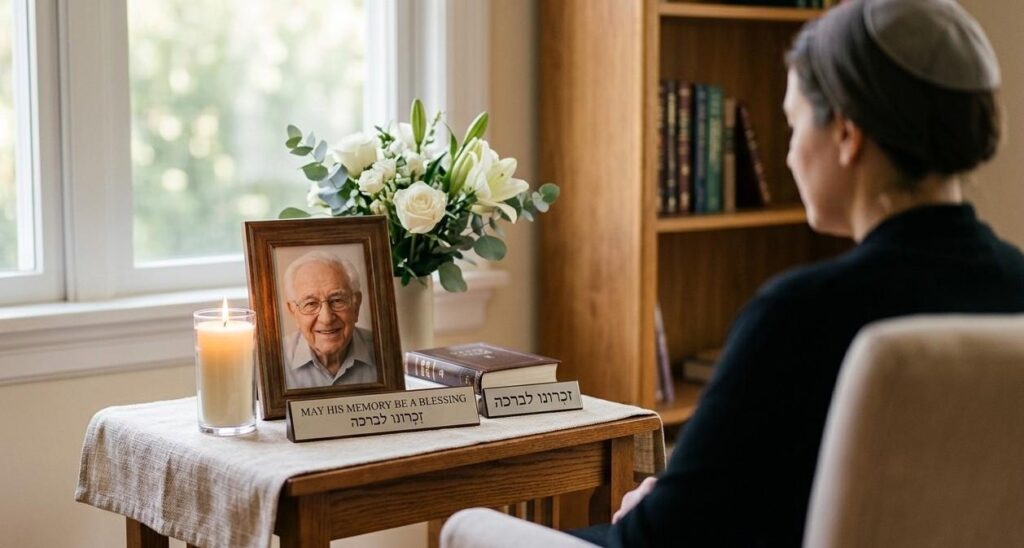
The phrase originates from the Hebrew zichrono livracha (זִיכְרוֹנוֹ לִבְרָכָה), which people use for men, and zichronah livracha (זִיכְרוֹנָהּ לִבְרָכָה) for women. Together, they translate literally as “may his/her memory be for a blessing.”
The word “zichrono” comes from the Hebrew root זכר (zachar), meaning “to remember.” The word “livracha” means “for a blessing. “Together: may the remembering of this person bring blessings into the world.
You will often see this blessed memory phrase abbreviated, particularly in Jewish publications, as z”l—from zichrono/zichronah livracha. Writers place it after a person’s name, like so: My grandfather, Moshe z”l, always said…
Another related abbreviation is O.B.M., standing for “of blessed memory”—the English equivalent common in obituaries and Jewish community writing.
Related Jewish mourning phrases and condolence expressions
Jewish tradition offers a rich vocabulary of loss. Here are a few related phrases you may encounter alongside “may his memory be a blessing”:
FAQ: Frequently Asked Questions
1. Is it “May his memory be a blessing” or “for a blessing”?
Both are acceptable translations. “For a blessing” is a more literal translation of the Hebrew Livrachah, implying the memory is a vehicle for future good. “Be a blessing” is more common in modern English.
2. Can I use this for someone who wasn’t Jewish?
Yes. While it originates in Jewish tradition, the sentiment is universal. It is a beautiful way to honor anyone who lived a life of impact.
3. What is the correct abbreviation for this phrase?
In English, there isn’t a standard abbreviation, but in Hebrew/Jewish contexts, you will see Z”L placed after the deceased’s name.
4. How do I respond if someone says this to me?
A simple “Thank you” or “Amen” is a perfect and respectful response.