
God’s Blessed: What It Really Means to Live in Divine Favor
Quick Answer: To be “God’s Blessed” means to live under God’s favor, grace, and provision—spiritually, emotionally, and sometimes materially. According to the Bible, God’s blessings flow to those who walk in faith, gratitude, and obedience. It’s less about a perfect life and more about a purposeful one.
I remember sitting in a hospital waiting room years ago, exhausted and scared, thinking, How can anyone call this a God-blessed life? But then a stranger offered me coffee, a nurse held my hand, and by some quiet miracle, the news turned out better than expected. So in that moment — not in my comfort, but in my crisis — I felt it. That inexplicable sense that something greater was watching over me.
That’s what “gods blessed” actually looks like in real life. It’s rarely a headline. It’s usually a whisper.
What “Gods Blessed” Actually Means
The phrase “gods blessed” refers to the condition of living under divine favor—receiving God’s grace, protection, love, and provision. It’s a concept woven through nearly every major faith tradition, but it runs especially deep in Christianity, Judaism, and Islam.
In the Christian faith, being blessed by God isn’t just about receiving good things. The Greek word “makarios,” used throughout the New Testament, means something closer to “deeply happy” or “flourishing.” It describes a state of wholeness, not just happiness.
Think of the Beatitudes in Matthew 5 — “Blessed are the poor in spirit, for theirs is the kingdom of heaven.” Jesus wasn’t talking about people who had it easy. Instead, he pointed to people whose lives were rooted in something eternal.
So when we say someone is “God-blessed,” we’re saying their life has meaning, direction, and divine support—regardless of the circumstances around them. That’s a very different definition than most people expect.
God’s Blessed: Why Divine Favor Changes Everything
Here’s the thing — in a world that measures worth by wealth, status, and social media followers, the idea of divine blessings cuts against the grain in the best way.
Research from Harvard’s Study of Adult Development (one of the longest-running studies on happiness) consistently shows that relationships, meaning, and purpose drive human flourishing—not money or fame. That aligns pretty closely with what spiritual texts have said for thousands of years about living a blessed life.
Being God-blessed matters because it reframes how you see everything. So a blessed mindset doesn’t mean ignoring pain. Rather, it means finding grace inside the pain.
For millions of people worldwide, the belief in God’s favor is what gets them through grief, illness, failure, and loneliness. According to a 2023 Gallup poll, 81% of Americans say they believe in God or a higher power—and many of them credit that belief as a primary source of strength and resilience.
That’s not just religion. That’s human psychology and spiritual truth working together.
How Divine Blessings Show Up in Everyday Life
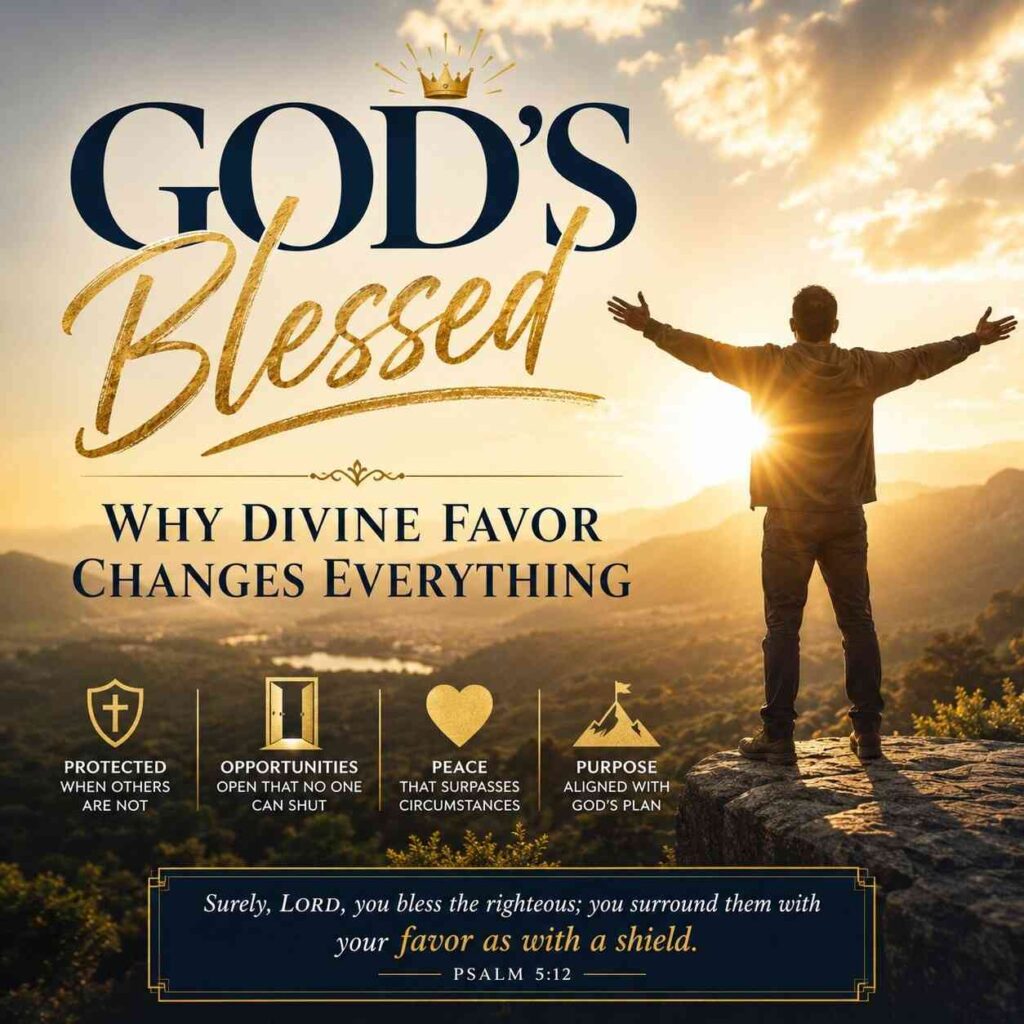
You don’t have to be a theologian to experience heavenly blessings. Here’s how divine favor tends to show up—once you know what to look for.
1. Through Relationships Most people, when they look back at pivotal moments in their lives, credit another person as the turning point. A mentor, a friend, a stranger. Those connections? Many believers see them as God-orchestrated, and honestly, it’s hard to argue when the timing is that precise.
2. Through provision, this doesn’t always mean material wealth. Sometimes it means the right opportunity arriving at the right time. A job offer. A closed door that leads you somewhere better. Provision looks different for everyone.
3. Through Inner Peace, Philippians 4:7 describes “the peace of God that surpasses all understanding.” People who have experienced this describe it as a calm that doesn’t make logical sense given their circumstances. Indeed, it’s one of the most commonly cited signs of God’s grace.
4. Through answered prayer, prayer is the active side of receiving blessings from heaven. It’s not a transaction — it’s a relationship. And like any relationship, the more you invest in it, the more you sense its presence.
5. Through Second Chances, God’s mercy connects closely to blessing. Many people describe their most powerful experience of being blessed by God
Key Facts and Statistics: Faith, Prayer, and Spiritual Blessings
Let me throw some real numbers at this, because I think data actually deepens the conversation about spiritual blessings.
- According to the Pew Research Center (2022), 63% of Americans pray daily, and the majority report that prayer has positively impacted their mental and emotional well-being.
- A study published in JAMA Internal Medicine found that people who attend religious services weekly carry a significantly lower risk of depression and anxiety.
- The Journal of Positive Psychology reports that gratitude — a core practice in thankful-to-God living — ranks among the strongest predictors of life satisfaction across cultures.
- According to the American Psychological Association, people with strong spiritual beliefs cope better with illness, loss, and trauma than those without.
These aren’t small findings. Spiritual blessings, it turns out, produce measurable psychological effects. Furthermore, faith and hope aren’t just comforting words—they’re protective forces that science keeps confirming.
God’s Blessed: The Different Forms of God’s Blessings
Not all blessings look alike. So here are the most recognized categories in Christian theology and broader spiritual traditions.
Spiritual Blessings: These are the blessings that touch your soul—salvation, forgiveness, purpose, and eternal hope. Ephesians 1:3 says God has “blessed us with every spiritual blessing in the heavenly places in Christ.” This foundation supports everything else.
Physical and Material Blessings: Yes, God cares about your practical needs. Jesus fed five thousand people with five loaves and two fish. Provision is real, though it doesn’t always look the way we expect.
Relational Blessings: Family, friendship, community, belonging — these are blessings in themselves. The Bible repeatedly emphasizes the value of godly relationships as part of a blessed life.
Circumstantial Blessings’ Timing. Open doors. Unexpected turns that lead somewhere good. Often, we only recognize these blessings in hindsight—and that’s precisely what makes them so striking.
The Blessing of Trials. This one surprises people. But James 1:2-4 frames hardship as a potential blessing—the kind that builds character, endurance, and depth. Some of the most powerfully blessed people I’ve ever met have walked through fire.
Expert Tips: How to Live a Truly Blessed Life
If you want to deepen your experience of divine blessings in daily life, here are some practices that have genuinely helped me and others.
Start with gratitude. A thankful heart is both a response to blessing and a magnet for more of it. So write down three things you’re grateful for each morning—not for Instagram, just for your soul.
Pray specifically. Vague prayers get vague answers. Be honest with God about what you actually need. That kind of vulnerability is what trust in God looks like in real time.
Read biblical blessings. Passages like Numbers 6:24-26, Psalm 23, and the entire Sermon on the Mount are saturated with language of God’s favor. Read them slowly. Let them sink in.
Serve others. One of the great paradoxes of spiritual growth is that the more you give, the more blessed you feel. Volunteer. Give. Show up for people. It works every time.
Community matters. Don’t try to live a blessed life alone. Instead, find a church, a small group, or a faith community. Iron sharpens iron (Proverbs 27:17).
Common Misconceptions About Being Blessed by God
Let me clear a few things up, because I’ve seen these ideas cause real harm.
Misconception #1: Being blessed means life is easy. Absolutely not. Some of the most blessed people in Scripture—Job, Paul, and Joseph—had extraordinarily difficult lives. Blessing isn’t about comfort; it’s about presence.
Misconception #2: Suffering means God has withdrawn His favor. This is probably the most damaging false belief out there. God’s love doesn’t fluctuate based on your circumstances. His mercy endures forever (Psalm 136).
Misconception #3: Blessings are only for certain people. Divine favor isn’t a VIP club. Instead, it’s available to anyone who seeks God with an honest heart. The Bible makes this wildly clear, and I’ve seen it play out in real people’s lives.
Misconception #4: You have to earn God’s blessings. This one trips people up constantly. While obedience and faith do play a role, grace—by definition—can’t be earned. God gives it. That’s the whole point.
Frequently Asked Questions: God’s Blessed
What does it mean to be God’s blessed?
Being God-blessed means living under divine favor — experiencing God’s grace, protection, and provision in your daily life. It’s a spiritual condition rooted in a relationship with God, not just a series of good events.
How do I know if God is blessing me?
Look for peace in uncertainty, provision in need, purpose in suffering, and the presence of good people in your life.
What are the most powerful biblical blessings?
The Aaronic Blessing (Numbers 6:24-26), the Beatitudes (Matthew 5:3-12), and Psalm 23 are among the most beloved and frequently cited passages about God’s blessings in the Bible.
Can I ask God to bless me?
Yes—and the Bible actually encourages it. Jabez prayed, “Oh, that You would bless me indeed” (1 Chronicles 4:10), and God granted his request. Asking is an act of faith.