
7 Dangerous Prayers in the Bible That Shook Heaven
Not every prayer in Scripture is safe, comfortable, or predictable. Some prayers put the person praying at risk—of judgment, of rejection, of their own life. These are the 7 dangerous prayers this article covers: real prayers, prayed by real people in the Bible, that were dangerous precisely because of what they asked for and what it cost the one asking.
Unlike prayers written today about spiritual warfare, these are prayers Scripture actually records—with chapter and verse. Each one changed the direction of a life, a nation, or all of human history.
What Makes a Prayer “Dangerous” Biblically?
A prayer becomes dangerous, in the biblical sense, when it does one or more of these things:
- It asks God for something that puts the person’s own safety or standing at risk
- It confronts injustice, sin, or evil directly instead of avoiding it
- It surrenders control completely, even when the outcome is unknown or costly
- It challenges God honestly, rather than offering polite, safe language
None of the 7 dangerous prayers below were reckless. They were bold—prayed by people willing to risk something in order to be heard.
The 7 Dangerous Prayers, at a Glance
| # | Who Prayed It | Reference | What Made It Dangerous |
|---|---|---|---|
| 1 | Moses | Exodus 32:9–14 | Offered to be erased from God’s book to save his people |
| 2 | Elijah | 1 Kings 18:36–39 | Publicly staked his life on God, answered by fire |
| 3 | Jonah | Jonah 2:1–9 | Prayed from inside a fish, fully surrendered to death |
| 4 | Hannah | 1 Samuel 1:10–18 | Vowed to give up her only son before he was even born |
| 5 | David | Psalm 109 | Called down direct judgment on his enemies |
| 6 | Jesus | Luke 22:41–44 | Submitted his will completely, knowing it led to the cross |
| 7 | Paul and Silas | Acts 16:25–26 | Prayed and sang praise while imprisoned and beaten |
1. Moses’ Dangerous Prayer to Spare a Nation
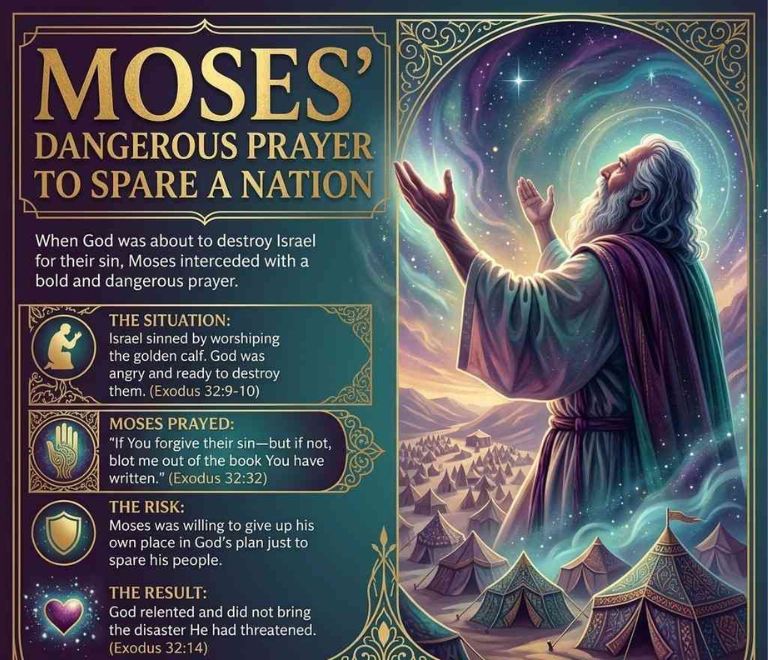
After Israel built the golden calf, God told Moses He would destroy the entire nation. Moses’ response in Exodus 32:9–14 is one of the boldest prayers in the Bible: he asked God to blot his own name out of His book rather than let the people be destroyed. Moses didn’t pray a safe, distant prayer for mercy—he offered his own future in exchange for theirs.
Why it’s dangerous: Moses put his own eternal standing on the line for people who had just betrayed God.
2. Elijah’s Dangerous Prayer for Fire
On Mount Carmel, Elijah stood alone against 450 prophets of Baal and prayed publicly for God to send fire from heaven (1 Kings 18:36–39). If nothing had happened, Elijah would have been humiliated and likely killed. There was no fallback plan—the prayer either worked in front of everyone, or it didn’t.
Why it’s dangerous: Elijah staked his credibility, and possibly his life, on a single public prayer with no room for a quiet retreat.
3. Jonah’s Dangerous Prayer of Surrender
Jonah 2 records the prayer Jonah prayed from inside the fish—after running from God, being thrown overboard, and facing what looked like certain death. It’s not a prayer for rescue in the way we’d expect; it’s a prayer of surrender, worship, and acknowledgment that God was right and Jonah was wrong.
Why it’s dangerous: Jonah prayed it fully, expecting he might not survive—and prayed gratitude anyway.
4. Hannah’s Dangerous Prayer for a Son
Hannah’s prayer in 1 Samuel 1:10–18 asked God for a son—but the vow attached to it was extraordinary. She promised to give the child back to the Lord’s service for his entire life, effectively giving up the very thing she was asking for the moment she received it.
Why it’s dangerous: Hannah risked years of waiting and then risked losing her son the moment her prayer was answered.
5. David’s Dangerous Prayer for Justice
Psalm 109 is one of the Bible’s imprecatory psalms—prayers that directly call for God’s judgment against an enemy. David doesn’t soften his language; he asks God to actively act against someone who had wronged him. These psalms make many modern readers uncomfortable, which is exactly why they’re considered dangerous prayers.
Why it’s dangerous: David prayed with total honesty about pain and injustice instead of suppressing it.
6. Jesus’ Dangerous Prayer in Gethsemane
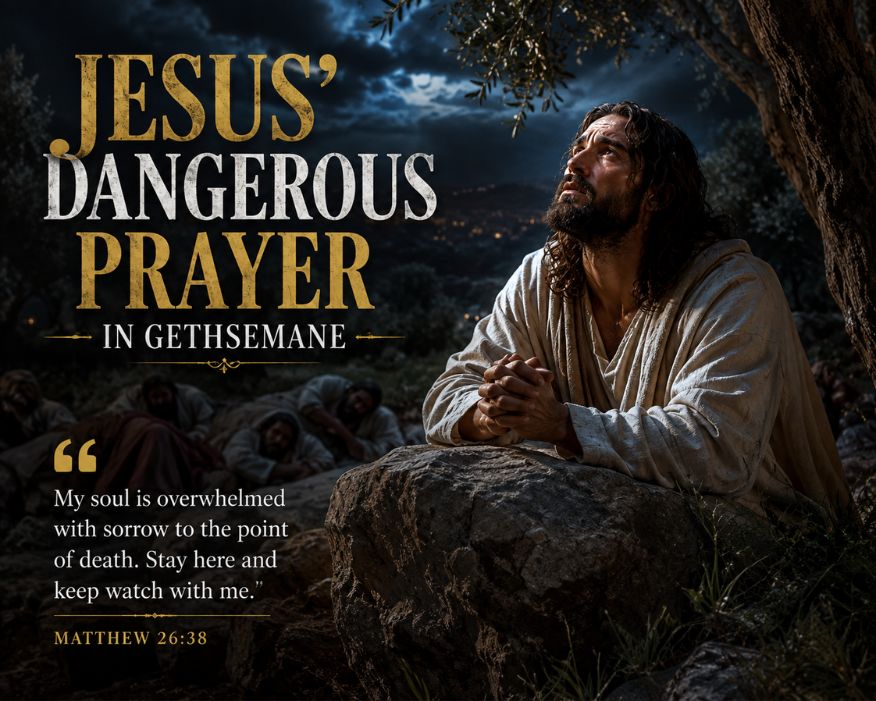
The most dangerous prayer ever prayed is arguably Luke 22:41–44—Jesus in the Garden of Gethsemane, asking that the coming suffering be taken from Him, then submitting completely: “Not my will, but yours be done.” Scripture records that His sweat became like drops of blood. This prayer led directly to the cross.
Why it’s dangerous: Jesus prayed it, knowing exactly what saying “yes” to God’s will would cost Him.
7. Paul and Silas’ Dangerous Prayer in Prison
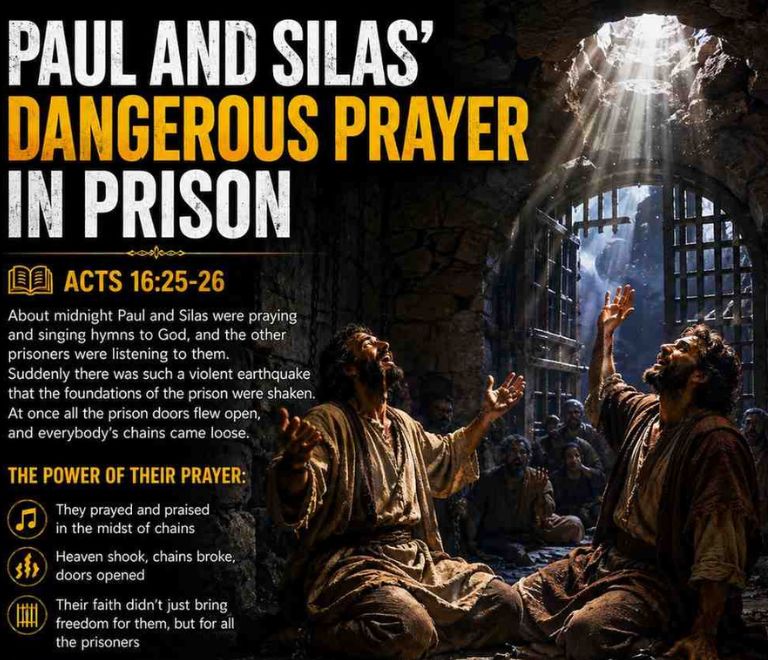
Acts 16:25–26 records Paul and Silas praying and singing hymns at midnight after being beaten and imprisoned, their feet in stocks. Their prayer wasn’t a quiet plea—it was worship, out loud, in front of other prisoners, with nothing but chains and a locked door around them. An earthquake followed, and every prisoner’s chains broke.
Why it’s dangerous: They prayed worship instead of despair in a situation with no natural way out.
Are Dangerous Prayers Biblical?
Yes. Each of the 7 dangerous prayers above is recorded directly in Scripture, prayed by people God clearly favored—Moses, Elijah, Hannah, David, Jesus Himself, and the apostle Paul. What unites them isn’t recklessness; it’s honesty and total surrender in moments where a safer, quieter prayer would have been easier to pray. You can read each account in full on Bible Gateway or Bible Hub for verse-by-verse context.
How to Pray a Dangerous Prayer Today
You don’t need to copy these prayers word for word—the pattern behind them matters more than the exact phrasing:
- Be specific, the way Moses and Elijah were specific
- Be honest about pain or injustice, the way David was in the psalms
- Surrender the outcome, the way Jonah and Jesus did
- Worship before the answer comes, the way Paul and Silas did
If you’re building a regular prayer practice around bold, Scripture-rooted prayer, see our related guide on prayers for spiritual strength or how to pray through Scripture.
Frequently Asked Questions About the 7 Dangerous Prayers
What are the 7 dangerous prayers in the Bible?
The prayers of Moses (Exodus 32), Elijah (1 Kings 18), Jonah (Jonah 2), Hannah (1 Samuel 1), David (Psalm 109), Jesus in Gethsemane (Luke 22), and Paul and Silas (Acts 16) are among Scripture’s most striking examples of dangerous, high-stakes prayer.
Why are these prayers called dangerous?
They’re called dangerous because each one puts the person praying at risk—of loss, judgment, humiliation, or death—rather than asking for something safe or predictable.
Are dangerous prayers the same as spiritual warfare prayers?
Not exactly. Spiritual warfare prayers are a modern prayer style focused on confronting spiritual opposition. The 7 dangerous prayers in this article are specific, recorded biblical events—historical prayers rather than a prayer method.
Which of the 7 dangerous prayers is the most significant?
Many theologians point to Jesus’ prayer in Gethsemane (Luke 22:41–44) as the most significant, since His surrender there led directly to the crucifixion and, in Christian belief, humanity’s redemption.
Can I pray a dangerous prayer for my own life?
Yes. The pattern behind these prayers—honesty, specificity, and full surrender—can be applied to any prayer, not just the original biblical events.